


Boeing flags 737 MAX landing navigation glitch
Boeing’s emailed statement landed at Reuters on Saturday confirming the company had already flagged a landing-navigation glitch to every 737 operator the month before. Leslie Josephs, filing for CNBC, placed the disclosure against the Wall Street Journal’s break of the story that same day, September 26, 2026, which cited internal company documents. Boeing had informed all 737 operators in August 2026.
“We shared information with operators that reinforced existing pilot procedures for safely handling such cases. Our engineers are working on a software update to permanently address the issue,” the company said.

The glitch surfaces after a missed approach, the climb-away pilots fly when they abandon a landing and prepare to try again. Once they alter the preprogrammed flight path loaded into the flight computers, automated vertical navigation and flight guidance can become unavailable on the subsequent approach. Vertical navigation is the system that manages the airplane’s descent path and altitude. Without it, the electronic guide that keeps the jet on profile down to the runway is gone. The affected software version is U.14. When the automation drops away, pilots must take additional manual steps if they want to use the automated tools again on that next approach. They are trained to land without the automated system. The airplane can still be flown to the runway. The glitch removes one layer of automation.
That is the full sequence: a go-around, a change to the programmed path, and then the possible loss of vertical navigation and flight guidance when the crew comes back around for another landing. Inside that window the automation crews normally rely on for the descent can simply fail to reappear.
The Federal Aviation Administration certified the 737 Max 7, the smallest of the Max family, in early August 2026 with the newest software already installed. Boeing is seeking federal approval for the fourth and final model in its best-selling aircraft family while that software comes under fresh examination. CEO Kelly Ortberg told investors this month he expected FAA certification of the Max 10 “very soon.” It was not immediately clear if the Max 7 could be delivered or fly with an older version of the software.

The family has lived under regulatory glass since two fatal crashes. Lion Air Flight 610 in 2018 and Ethiopian Airlines Flight 302 in 2019 each involved a Max 8. The crashes killed 346 people combined. A flawed flight-control software system, which has since been updated, was implicated in both accidents. They led to a worldwide grounding of the 737 Max. Years of delays for Boeing’s Max planes followed those safety and manufacturing crises as the company kept working to finish certifying the remaining models against that record.
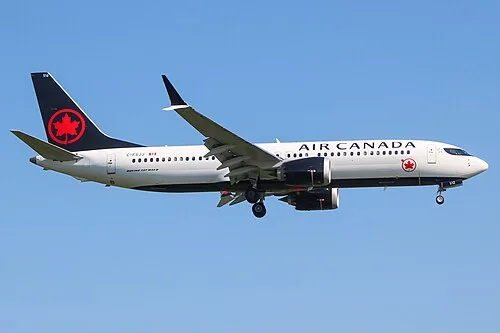
Southwest Airlines and United Airlines asked Boeing to withhold deliveries of new 737 Max jets carrying software version U.14 and to supply an earlier version instead. Southwest, an all-Boeing 737 Max carrier, said it is “aware of the issue and is engaged with Boeing and the FAA.” The airline then stated the fact that covered its entire operation: “none of our fleet is equipped with Version U.14, including new deliveries of Max 8 airplanes.” United Airlines took the same position. It said it is not taking any Max aircraft deliveries with the new software. U.S. airlines told CNBC that they do not have Max 8 and Max 9 airplanes with the updated software tied to the glitch in their fleets. Airlines can revert some Maxes to the older software version. The number of aircraft currently operating with the flawed software was not immediately clear.

The Federal Aviation Administration answered on Saturday with a statement of its own. The agency said it was aware of a potential issue in a software update for the flight computers on certain Boeing 737 Max airplanes. It confirmed it was working closely with Boeing and the airlines on the matter. “The FAA will convene a Corrective Action Review Board and will take immediate action if it identifies a safety concern,” the FAA said. The agency was assessing the problem and would review the fix the manufacturer proposed.
Boeing began working directly with the airlines on the measure that would cover the gap. “We are working directly with airlines to formalize a procedure that will allow pilots to reenable automated vertical navigation should this situation occur,” Boeing said. The permanent software update remained in engineering. No schedule for that update was released.
There are 2,430 Boeing 737 Max aircraft in service globally, according to Cirium.