




Turn a near-ruin into principles you can actually use
People weighing big career or money calls should know Dalio's whole system began when a wrong depression call left him laying everyone off and borrowing $4,000 from his father.
IJR · Oct 8, 2026 · 5 min read
The big idea
Dalio argues success comes from writing explicit principles extracted from painful, documented failures instead of trusting gut instinct. After 1982 nearly ended him, he built radical honesty, radical transparency, and believability-weighted decisions that treat mistakes as searchable data.
The key ideas

He went on television predicting a depression from Latin American debt defaults and a slowing economy. He was wrong. Markets rallied for years. Bridgewater lost so much he laid off every employee and borrowed $4,000 from his father to pay family bills.
He treated that humiliation as his career's most valuable event because it exposed how overconfident he had been even when right about separate facts. He began seeking the most thoughtful people who disagreed with him, logging the flawed decision rules inside the failed reasoning, and turning pain plus reflection into progress instead of ego protection.

He calls this radical open-mindedness: caring more about being right than about having been right. Two barriers fight it—the ego barrier that defends a view because identity is attached, and the blind-spot barrier that makes every strength hide other details.
He does not erase the barriers by willpower. He builds external systems around them, pairing a macro thinker with an execution specialist so each catches what the other misses, and he asks whether you have earned your opinion through relevant experience before you defend it.
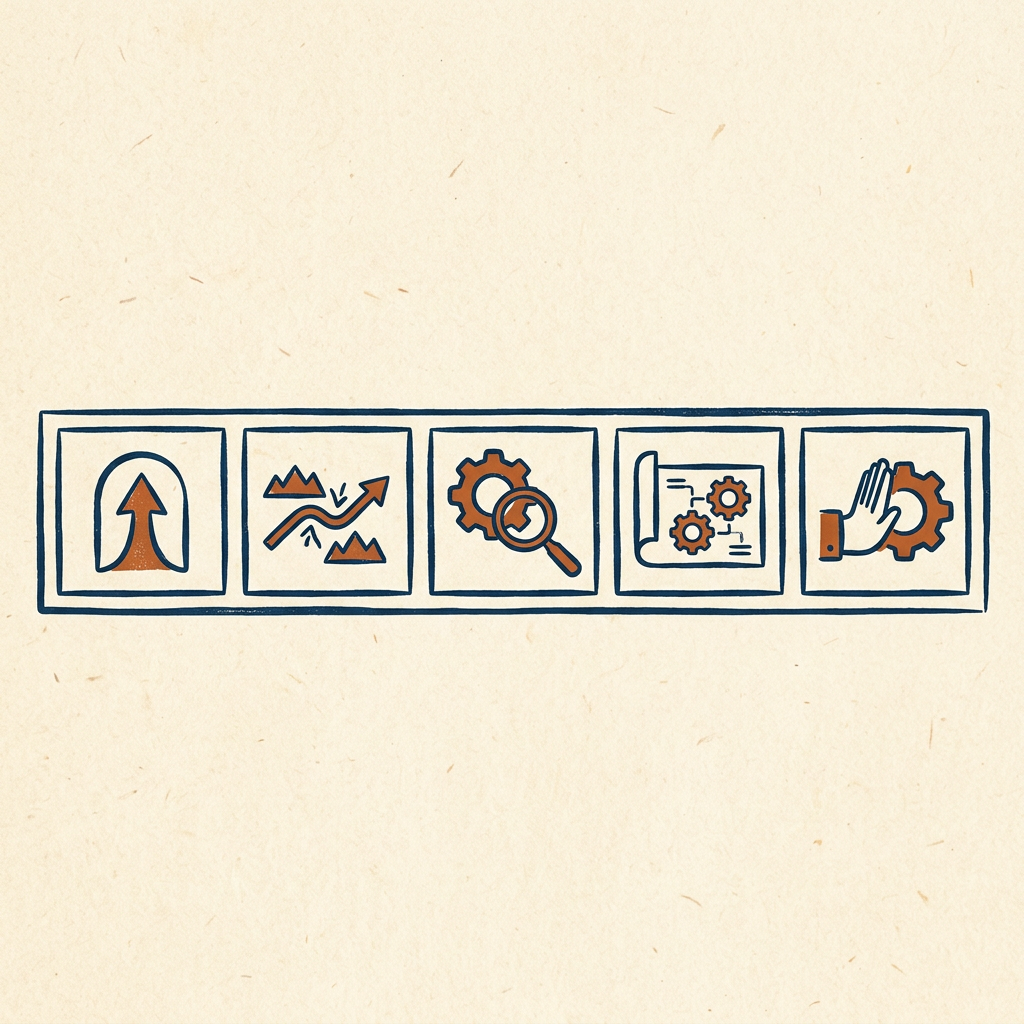
The order is set clear goals, identify the problems, diagnose root causes, design a plan, then push through to execute. Most people blur the steps and jump straight from noticing a problem to a fix.
Diagnosis gets special weight. A Bridgewater employee kept missing deadlines; the surface fix was a stricter deadline, but the real diagnosis showed a role mismatched to actual capabilities. Genuine limits call for redesign of the role or task, not endless extra effort, and the whole sequence should be written down so fuzzy thinking shows.

Meetings are recorded and often shared company-wide. Employees are expected to state disagreements with superiors openly, and juniors have publicly criticized Dalio in documented exchanges. Private criticism teaches only two people; public criticism lets the whole organization calibrate judgment on the person and the issue.
He claims trust paradoxically grows once people see direct criticism given and taken without retaliation—a claim the record itself complicates below. He also notes the emotional cost, high turnover, and strain on new hires who cannot adjust, which he frames as a filter for those who can separate ego from ideas.

Believability weighting gives more say to people who have repeatedly shown good judgment in the relevant area, regardless of title or seniority. Bridgewater built tools such as the Dot Collector so employees rate one another in real time on qualities like reliability or open-mindedness, creating quantified profiles across decision types.
A talented new analyst's sharp take on a narrow technical question can outweigh a senior partner on that specific point while the partner still leads on overall portfolio risk. The system needs the earlier transparency so track records stay visible over time instead of hidden by politeness.

Pain plus reflection equals progress is meant literally. The discomfort is the fuel that makes people willing to change mental models; without structured reflection the same pain just produces avoidance or defensiveness.
Employees log their own mistakes and others', tagged by root cause, in a searchable firm-wide issue log. Mistakes from not knowing are instructive; mistakes from ignoring known principles signal a discipline failure. Over years the log becomes an organizational memory of real dated cases that outlasts any single employee.

He treats traits such as big-picture versus detail focus, or creative starter versus reliable finisher, as relatively fixed. Psychometric tools and a shared vocabulary let managers place people where their wiring fits instead of punishing the mismatch.
A great visionary and a great operator are often different people; forcing one person to be both is a common avoidable failure. Self-knowledge from honest assessment and mistake logs should decide the job you take or give, and sometimes the kindest move is saying the role or even the company is not right.
What to do
- Write one recent painful mistake and the exact decision rule that produced it.
- Run a live goal through the five steps on paper and stop at root-cause diagnosis before any fix.
- In your next disagreement ask whether you earned the opinion through relevant evidence or experience.
- Before treating two views as equal, note each person's actual track record in that specific domain.
- Flag one recurring work problem and tag its likely root cause instead of only the surface symptom.
The other side
The evidence is almost entirely one founder-controlled company in one era; outside reporting describes high anxiety, high new-hire turnover, and surveillance that critics read as selecting a narrow personality type rather than pure progress. Survivorship bias is underweighted, believability is harder to score where outcomes are ambiguous or delayed, and treating weaknesses as fixed traits risks writing people off too early.
Who it's for
Managers wanting concrete culture tools over vague values, and people facing big financial or career calls who need a repeatable process. Also readers curious how Bridgewater runs internal disagreement.