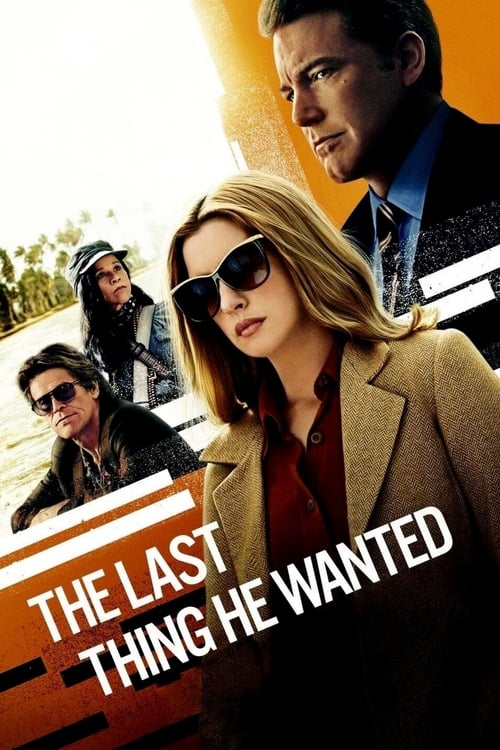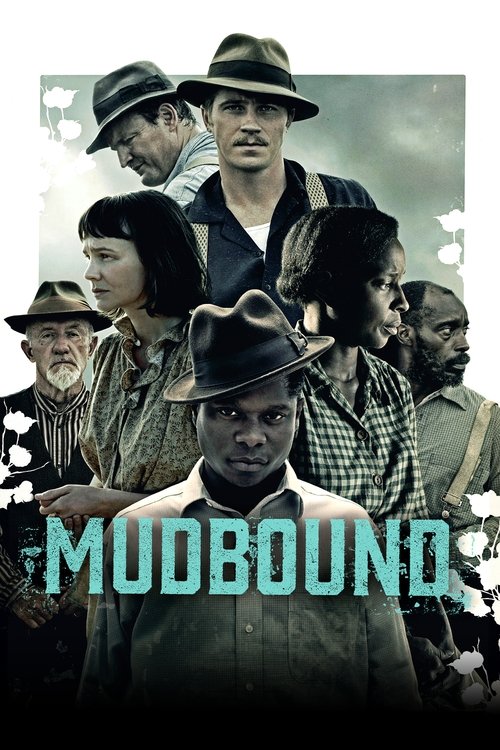




Diandrea Rees (born February 7, 1977) is an American screenwriter and director. She is known for her feature films Pariah (2011), Bessie (2015), Mudbound (2017), and The Last Thing He Wanted (2020). Rees has also written and directed episodes for television series including Empire, When We Rise, and Philip K. Dick's Electric Dreams.
Rees is the first African-American woman nominated for the Academy Award for Best Adapted Screenplay, for Mudbound. She has also received Primetime Emmy Award nominations for Outstanding Writing and Outstanding Directing for a Limited or Anthology Series or Movie, and won the Directors Guild of America Award for Outstanding Directing – Miniseries or TV Film for Bessie.
Rees received a United States Artists Fellowship in 2011.
Contents
Early life and education
Rees was born in 1977 in Nashville, Tennessee. Her father was a police officer and her mother was a scientist at Vanderbilt University. Rees attended local schools and college at Florida A&M University. After graduating from business school, Rees held an array of jobs, including working as a salesperson for panty-liners, a vendor for wart-remover and bunion pads, and also worked in marketing and brand management. While working for Dr. Scholl's, Rees worked on set for a commercial and she realized she enjoyed the creation of film content. This led her to pursue film school. For graduate school, she attended New York University's Tisch School of the Arts. While at New York University for film, Spike Lee was her professor and mentor. Dee Rees went on to work under Spike Lee on his films Inside Man (2006) and When the Levees Broke (2006). During this time, she worked on a script for what would later be the feature film Pariah. For her graduate thesis, she adapted the first act of the script and directed it as a short film of the same name. In 2007, the short played at 40 film festivals around the world, winning numerous accolades, including the Audience Award at the Los Angeles Film Festival.
Career
Rees' first full-length film was a documentary, Eventual Salvation (2009), which aired on the Sundance Channel. The film follows her American-born, 80-year-old grandmother, Amma, as she returns to Monrovia, Liberia to rebuild her home and community. She had barely escaped the devastating Liberian Civil War only a decade earlier.
Rees completed development and filming of her debut feature film, Pariah, which she has described as semi-autobiographical. In graduate school Rees interned for Spike Lee, whom she got to executive produce the film. It premiered at the 2011 Sundance Film Festival. Lisa Schwartzman of Entertainment Weekly wrote, "In her fearless, world-here-I-am! debut Pariah, writer-director Dee Rees demonstrates, with simplicity and verve, that there's no substitute for authenticity". Pariah explores the complexities of religion, politics and socioeconomic class within and surrounding a Black family. The short film version of Pariah was initially a thesis project done by Dee Rees in film school. It was difficult to receive funding for the feature film, and the process took about five years to reach completion. The format and content changed significantly from the short film to the feature film. The transition from short film to feature film meant it needed to be more accessible for a wider audience in order to make money. This accessibility reached new audiences and sparked new conversations that were focused on blackness and sexuality in a new way.
At the time Pariah (2011) was released, the film was one of the very few films that follow the journey of a young person of color as they come to terms with their sexuality and come out to their friends and families. In 2011, she won many awards for Pariah, including the John Cassavetes Award at the Independent Spirit Awards, the Gotham Independent Film Award for Breakthrough Director, the Outstanding Independent Motion Picture Award at the NAACP Image Awards, and the Outstanding Film –Limited Release Award at the GLAAD Media Award in 2012.
Pariah has been compared to the written work of Audre Lorde, specifically Zami: a New Spelling of My Name. Both forms provide a different take on the lived experiences of young Black lesbian women in a way that gives the characters depth and power. Both stories of identity, they are not only diversifying the characters audiences enjoy in media, but also providing an authentic expression of these lives.
Filmmaking
Influences
Rees has said that she was inspired by the realistic directorial style of Cassavetes, and the cinematographer Bradford Young's organic style on the television show Friday Night Lights.
Method and Themes
As with Rees's first breakout feature, Pariah (2011), Dee Rees pulls much of her directorial influence from her own life. Rees also cites her own life experiences in the protagonist of her newest project, The Kyd's Exquisite Follies. As a Black lesbian filmmaker, Rees's intersectional identity is a huge part of her and is also unique in Hollywood. Rees has said that her dissimilarity from much of Hollywood has only amplified the importance of translating her experience into her films.
Rees's sexuality makes an appearance in her films, such as her 2011 film Pariah (2011), which tells the story of a teenage Black girl navigating the exploration of her sexuality. HBO's Bessie (2015), also written and directed by Rees, explores the sexual identity of blues singer Bessie Smith. Rees also described the protagonist of her latest project, The Kyd's Exquisite Follies as androgynous, again connecting her own experience of sexuality to her filmmaking.
Rees's identity as a Black woman is also very prevalent in her films, as Black women are extremely central in her films, such as Pariah (2011), Mudbound (2017), Bessie (2015), and a few of her upcoming projects.
Still early in her career, Rees has shown a large array of stylistic choices in her films in her exploration for her identity as a filmmaker. However, Rees has been said to spend hours on shots that end up only being a few seconds, focusing intently on visual details.
Collaborators
Spike Lee was Rees's mentor throughout her time at NYU Tisch, and the two worked on films together such as Inside Man (2006) and When The Levees Broke (2006). Lee also worked as a producer on Rees's breakout film, Pariah (2011).
Cassian Elwes, producer of Mudbound (2017), has worked with Rees on multiple projects, such as The Last Thing He Wanted (2020) and Rees's upcoming project, The Kyd's Exquisite Follies.
Lisa Cortés directed and produced the 2023 documentary film Little Richard: I am Everything, with Rees serving as an executive producer.
Personal life
Rees is a lesbian, and she described Pariah as semi-autobiographical. On National Coming Out Day in 2011, in an interview with BlackEnterprise.com, Rees discussed her coming out experience. When she came out her parents weren't accepting. They sent her emails, cards, letters and Bible verses. Rees sees Pariah as semi-autobiographical because she can relate to the main concepts of the film.
Since at least 2017, Rees has been in a relationship with poet and writer Sarah M. Broom. They are now married and currently reside in Harlem.
Rees, who is of African American descent, incorporates her family's history, specifically her own grandmother's, in her 2017 film Mudbound where American violence and racism are more relevant to the lives of all citizens and a marker of each individual's identity.
Filmography
Short film
Feature film
Television