



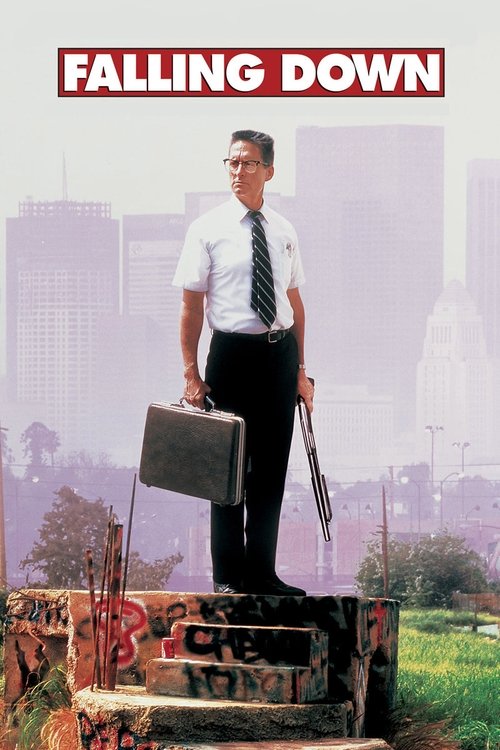


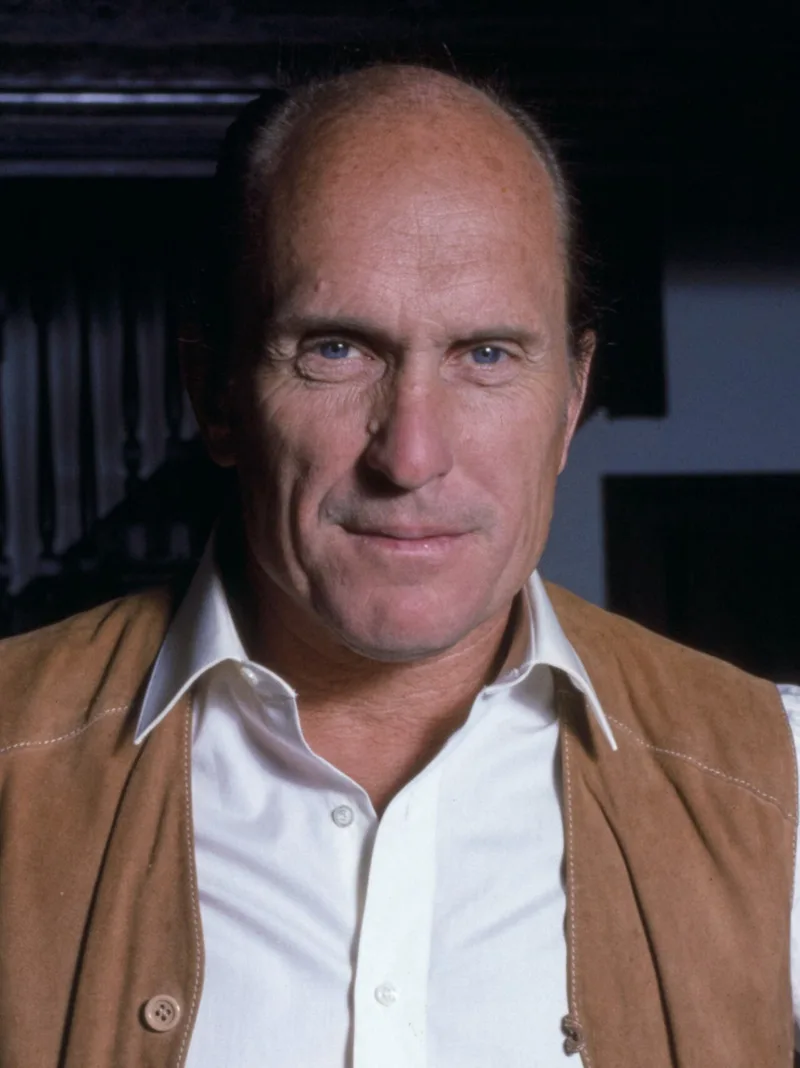





Falling Down is a 1993 American action drama film directed by Joel Schumacher, written by Ebbe Roe Smith, and starring Michael Douglas and Robert Duvall. Set in Los Angeles, the film tells the story of William Foster, a disgruntled, unemployed defense worker who abandons his car in the middle of a traffic jam and goes on a violent rampage trying to reach his family for his daughter's birthday. Martin Prendergast, a retiring police officer, attempts to catch Foster.
On its release, the film received mixed reviews, with some praising the performances from Douglas and Duvall, while criticizing the film's violence and tone. It grossed $96 million against a $25 million budget, taking the top spot at the United States box office in its first two weeks of release. In later years, the film has gained cult status, with many citing it as one of Schumacher's best films, as well as one of Douglas's best roles. The film has since continued to be analyzed for its themes of the class system, economic pressures, and mental health.
Contents
Plot
William Foster is stuck in Los Angeles traffic on a hot day. After his air conditioning fails, he abandons his car and begins walking, carrying his briefcase.
At a convenience store, the Korean owner refuses to give change for a telephone call. Foster becomes agitated over the high prices. The owner grabs a baseball bat and demands that Foster leave. Foster takes the bat and destroys several merchandise displays before paying for a drink and leaving. Later, while resting on a hill, he is accosted by two Mexican gang members, who threaten him with a knife and demand his briefcase. Foster attacks them with the bat and takes their knife.
The gang members, now in a car with two associates, find Foster using a payphone. They open fire, killing four bystanders, but not Foster. The driver crashes. Foster picks up a weapon they had, shoots the surviving gang member in the leg, and then leaves with their bag of weapons. Foster encounters a panhandler who harasses him for change. Foster gives him the briefcase, which only contains his lunch.
At a fast-food restaurant, Foster attempts to order breakfast, but is told they have switched to the lunch menu. After an argument with the manager, Foster pulls a gun and fires into the ceiling accidentally. After trying to reassure the frightened employees and customers, he orders lunch, but is annoyed when the burger looks nothing like the one pictured. He leaves and tries to place a call from a phone booth, then shoots the booth to pieces after being hassled by someone who was waiting to use the phone. After Foster calls "home" again and states his intention to attend his daughter's birthday party, his ex-wife Beth notifies the police as she has a restraining order against him.
Sergeant Martin Prendergast, who is on his last day of duty (having been coaxed into retirement by his wife), insists on investigating the events. Interviews with witnesses lead Prendergast to suspect that the same person is responsible for all of them. Foster's vanity license plate, which read "D-FENS", proves to be an important lead, because Prendergast remembers being in the same traffic jam as Foster. Prendergast and his partner, Detective Sandra Torres, visit Foster's mother, who is surprised to learn that he lost his job. They realize Foster is heading toward his former family's home in Venice and rush to intercept him.
Production
Development
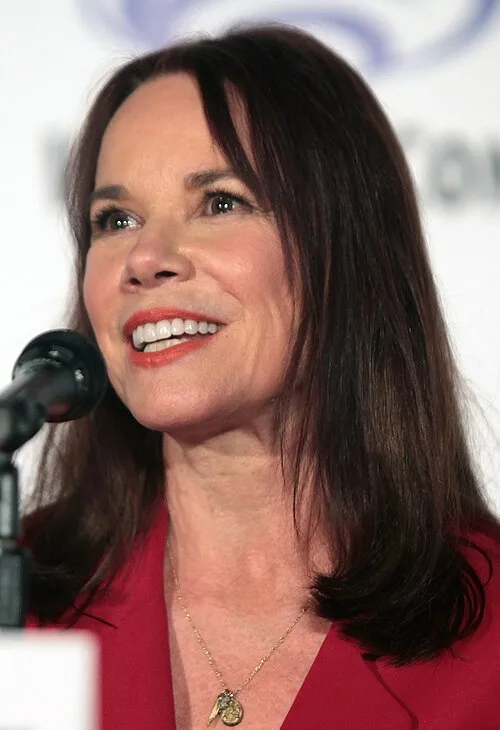
Falling Down was being filmed in various locations in Lynwood, California, when the 1992 Los Angeles riots began. By April 30, the riots were sufficiently disruptive to force filming to stop early that day. Film crews produced more footage inside of Warner Bros. Studios Burbank, as the riots continued. By May 4, when the crew intended to resume in Pasadena, initial requests to do so were denied, causing delays. Filming wrapped in late June 1992. Production designer Barbara Ling said: "We mapped this so that you really were going across Los Angeles from Silver Lake down to mid-city to Koreatown."
In an interview less than a week before Falling Down's release, screenwriter Ebbe Roe Smith gave his interpretation of what the movie was about. "To me, even though the movie deals with complicated urban issues, it really is just about one basic thing: The main character represents the old power structure of the U.S. that has now become archaic, and hopelessly lost. For both of them, it's adjust-or-die time ..."
According to Michael Douglas, the script was initially planned to be made into a television film.
Casting
Foster's signature haircut was the idea of Joel Schumacher and the movie's hairstylist, Lynda Gurasich. Douglas commented on how it helped him get into the character of a veteran of the military or defense industry: "It gave me the feeling of the late '50s and the early '60s, and somehow my character you kinda have the feeling that he came from another time, or he wished or he hoped for another time when things made sense." Douglas would add concerning the character: "There's a lot of people who are a paycheck away from being on the streets and being out of work who did everything right, they've been responsible, they tried hard, [and] they don't know what went wrong! We won the war, where's it all at?"
Release
Falling Down premiered In New York and Los Angeles on February 26 1993.
Home media
The film was first released on VHS and then on DVD. Subsequently, the film was released by on a Limited Edition 4K Ultra HD Blu-ray and regular Blu-ray disc on July 20, 2026 by Arrow Films, with the same supplemental features as the previous version.
It includes audio commentary and a 2009 interview with Douglas three new special features titled Man on the Edge an interview with screenwriter Ebbe Roe Smith, At War with the World an interview with composer James Newton Howard and Going Home, a location featurette revisiting the filmed sites with the remaining bonus features carrying over from previous versions.
Reception
Box office
The film grossed $96 million against a $25 million budget. It took the top spot at the United States box office in its first two weeks of release (February 26–28 and March 5–7, 1993). Falling Down pushed the previous top movie, Groundhog Day, into the second place box-office spot for both those weeks. It grossed $40.9 million in the United States and Canada and $55.1 million internationally.
Critical reception
Falling Down holds an approval rating of 77% on Rotten Tomatoes based on 60 reviews, with an average rating of 6.90/10. The site's consensus states: "Falling Down's popcorn-friendly take on its complex themes proves disquieting—and ultimately fitting for a bleakly entertaining picture of one man's angry break with reality." The film has a weighted average score of 56 out of 100 on Metacritic based on 21 critics, indicating "mixed or average" reviews. Audiences surveyed by CinemaScore gave the film an average grade of "B" on an A+ to F scale.
Contemporary reviews of Falling Down were generally mixed to positive.
Vincent Canby of The New York Times called it "the most interesting, all-out commercial American film of the year to date, and one that will function much like a Rorschach test to expose the secrets of those who watch it." Philip Thomas of Empire wrote in his review of the film: "While the morality of D-Fens's methods are questionable, there's a resonance about his reaction to everyday annoyances, and Michael Douglas' hypnotic performance makes it memorable." James Berardinelli wrote: "Falling Down is replete with gallows humor, almost to the point where it could be classified as a 'black comedy'." John Truby calls the film "an anti-Odyssey story" about "the lie of the American Dream". He adds: "I can't remember laughing so hard in a movie." Kenneth Turan of the Los Angeles Times wrote: "Falling Down encourages a gloating sense that we the long-suffering victims are finally getting our splendid revenge. The ultimate hollowness of that kind of triumph reflects the shallowness of a film all too eager to serve it up."
Roger Ebert, who gave the film a positive review at the time of its release, wrote:
Some will even find it racist because the targets of the film's hero are African American, Latino, and Korean—with a few whites thrown in for balance. Both of these approaches represent a facile reading of the film, which is actually about a great sadness, which turns into madness, and which can afflict anyone who is told, after many years of hard work, that he is unnecessary and irrelevant... What is fascinating about the Douglas character, as written and played, is the core of sadness in his soul. Yes, by the time we meet him, he has gone over the edge. But there is no exhilaration in his rampage, no release. He seems weary and confused, and in his actions he unconsciously follows scripts that he may have learned from the movies, or on the news, where other frustrated misfits vent their rage on innocent bystanders.
Accolades
1993 Cannes Film Festival, Nominated for the Palme d'Or (Joel Schumacher)
1994 Edgar Award, Won for Best Motion Picture Screenplay (Ebbe Roe Smith)
In other media
Music
Falling Down has been the inspiration of musical artists such as Iron Maiden, Foo Fighters, Front Line Assembly and Heart Attack Man.
The Iron Maiden song "Man on the Edge" is a basic summary of Falling Down, beginning with describing the opening traffic jam, and ending with describing the birthday present Foster buys for his daughter.
The Foo Fighters' song "Walk" has a music video that is a recreation of scenes from Falling Down.
The Front Line Assembly album Millennium contains several samples from various scenes from Falling Down.
The Heart Attack Man song "Out For Blood" was inspired by the anger and frustration weaved through Falling Down which weaves through the rest of their album Fake Blood.
Death metal band Internal Bleeding sampled the same scene in their song "Falling Down," named after the film, from their album Driven to Conquer.
In the song "I'm in It", Kanye West refers to the film when he raps: "Time to take it too far now/Michael Douglas out the car now".
Finnish band Beats and Styles referred to the movie poster with DJ Control holding a baseball bat instead of a shotgun for the cover of their 2009 album Schizosonics.
Animation
An episode of the animated series Duckman titled "A Room with a Bellevue" (episode six of season three), is loosely based on the plot of Falling Down. Duckman has to pick up his new suit from the dry cleaner to be presentable on his children's birthday, but huge traffic and the law are going to stop him.
Frank Grimes, a one-off character on The Simpsons episode "Homer's Enemy", is modeled after Foster, having the same flat-top haircut, white shirt-and-tie, and briefcase.
Video games
In the video game Tony Hawk's American Wasteland, a character resembling Foster tasks the player with disrupting the workers at a construction site, then uses a rocket launcher to destroy it.