1950–1953: Worldwide recognition
Peck began the 1950s with two Westerns, the first being The Gunfighter (1950), directed by Henry King, who had worked with him previously on Twelve O'Clock High. Peck plays an aging "Top Gun of the West" who is now weary of killing and wishes to retire with his alluring but pragmatic wife and his seven-year-old son, both of whom he has not seen for many years. Peck and King did much photographic research about the Wild West Era, discovering that most cowboys had facial hair, "bowl" haircuts and wore beat-up clothing; Peck subsequently wore a mustache while filming. The studio's president called for re-shoots upon seeing the initial footage with the mustache, but backed out due to costs that were inflated by the production manager at King and Peck's persuasion. The Gunfighter had disappointing sales at the box office, with $5.6 million in receipts, 47th place for earnings in 1951. 20th Century Fox's studio chief Darryl Zanuck blamed Peck's mustache for the lukewarm reaction from Peck's typical fans, stating that they wanted to see the usual handsome, clean-shaven Peck, not the authentic-cowboy Peck. The Gunfighter received "solid reviews" upon release, with particular enthusiasm from some critics, with Peck's performance "bringing him some of his best notices." The New York Times wrote, "through Mr. Peck's fine performance, a fair comprehension is conveyed of the loneliness and the isolation of a man with a lurid name...an arresting and quite exciting film." The movie has grown in critical appreciation over the years and "is now considered one of the all-time classic Westerns" Critics of recent decades uniformly praise Peck's performance, with David Parkinson of Radio Times saying "Peck gives a performance of characteristic dignity and grit."
Peck's next Western was Only the Valiant (1951), a low-budget movie; Peck disliked the script and would later label the film as the low point of his career. Peck's non-exclusive contract with David O. Selznick permitted Selznick to sell Peck's services to Warner Bros for this movie after running into financial difficulties. The plot of the film is listed as "an unpopular, strict leader gathers together a rag-tag group of men and leads them on an extremely dangerous mission, turning them into a well-oiled fighting machine by the end and earning respect along the way." Peck portrays a U.S. army captain and the mission is to protect an undermanned army fort against the attacking Apaches. Peck's romantic interest was played by Barbara Payton. Variety's review said "In this cavalry yarn...great pains have been exerted to provide interesting characters. Peck makes the most of a colorful role." It earned a moderate $5.7 million, ranking 35th in sales for the year. This little-remembered picture receives mixed reviews today, although Peck's acting is praised.
Peck's second 1951 release was the book-to-film adaptation Captain Horatio Hornblower, featuring Peck as the commander of a warship in the British fleet during the Napoleonic Wars who finds romance with Virginia Mayo's character. Peck was attracted to the character, saying, "I thought Hornblower was an interesting character. I never believe in heroes who are unmitigated and unadulterated heroes, who never know the meaning of fear." The role had been originally intended for Errol Flynn, but he was felt to be too old by the time the project came to fruition. Directed by Raoul Walsh,Captain Horatio Hornblower was a box office success, finishing ninth for the year in the UK and seventh in the North America. Peck's role in the film was largely praised by reviewers. The Associated Press stated that Peck provided "the proper dash and authenticity as the remarkable nineteenth-century skipper" and Variety later wrote "Peck stands out as a skilled artist, capturing the spirit of the character and atmosphere of the period." Modern reviews have given mixed reactions to Peck's performance. Richard Gilliam of AllMovie argues that it is "an excellent performance from Gregory Peck" stating that "Peck brings his customary aura of intelligence and moral authority to the role," while the Radio Times asserts "Gregory Peck plays Hornblower as a high-principle stuff shirt and thus confounds director Raoul Walsh's efforts to inject some pace."
His third film under Henry King's direction, David and Bathsheba, a Biblical epic, was the top-grossing movie of 1951. The two-hit-movie punch of Horatio and David elevated Peck to the status of Hollywood mega-star. David and Bathsheba tells the story of David (Peck), who slew Goliath as a teenager, and later as the beloved King, becomes infatuated with the married Bathsheba, played by Susan Hayward. Peck's performance in David and Bathsheba was evaluated upon release by The New York Times as "an authoritative performance," and Variety stated "Peck is a commanding personality...he shades his character expertly," In recent years, critics have argued that his "stiff" performance is made up for in charisma, but overall, they praised his strength in the role; Leonard Maltin says the movie has "only fair performances." David and Bathsheba opened with positive reviews, including praise for avoiding excessive spectacle while remaining an epic with "dignified restraint."
Peck returned to swashbucklers in The World in His Arms (1952), reuniting him with director Raoul Walsh. Peck portrays a seal-hunting ship captain in 1850 San Francisco who romances a Russian countess played by Ann Blyth and ends up engaging a rival sealer played by Anthony Quinn in a sailing race to Alaska. The film was given positive reviews by both contemporary and modern critics. All Movie commented that Peck is "a superb actor, who brings enormous skill to the part, but who simply lacks the overt derring-do and danger that is part of the role." The film was moderately successful, more so in the UK than in North America.
He reunited with previous collaborators King, Hayward, and Gardner in The Snows of Kilimanjaro (1952), an adaptation of a short story by Ernest Hemingway. The film stars Peck as a self-concerned writer looking back on his life, particularly his romance with his first wife (Gardner), while he slowly dies from an accidental wound while on an African hunting expedition with his current wife (Hayward) nursing him. The film was praised for its cinematography and direction. Most reviews praise Peck's performance, with TV Guide saying the story is "enacted with power and conviction by Peck," although some criticized his "bland" expressions. Peck, who at that time was married to Finnish American-born Greta Kukkonen, even made a two-day visit to Helsinki in January 1953, participating in an invited guest premiere of The Snows of Kilimanjaro that premiered in Finland. The Snows of Kilimanjaro was a box office hit and ranked as the fourth-highest-grossing movie of 1952.
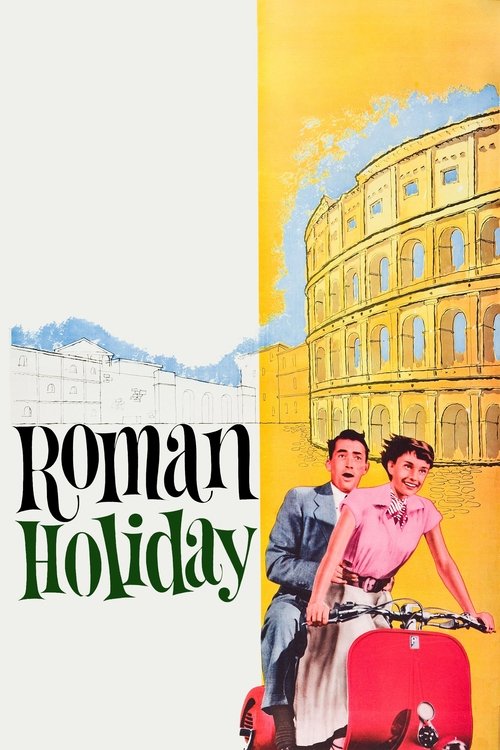
Peck's "first real foray into comedy" was Roman Holiday (1953), directed by William Wyler. He portrayed American journalist Joe Bradley opposite Audrey Hepburn in her first significant film role, playing a European princess. Peck's role in Roman Holiday had originally been offered to Cary Grant, who turned it down because the part appeared to be more of a supporting role to the princess. Peck had the same concern, but he was persuaded by Wyler that the on-site filming in Rome would be an exceptional experience and Peck accepted the part, eventually insisting that Hepburn's name be above the title of the film (just beneath his) in the opening credits. Peck later stated that he'd told his agent, "I'm smart enough to know this girl's going to win the Oscar in her first picture, and I'm going to look like a damned fool if her name is not up there on top with mine."
Roman Holiday was a commercial success, finishing 22nd in the box office in 1953. The film continued to make money after its release, with "modern sources noting it earned $10 million total at the box office." Critics praised Peck's performance; Bosley Crowther stated that "Peck makes a stalwart and manly escort...whose eyes belie his restrained exterior," while the Hollywood Reporter commented that "Peck turns in another of his outstanding performances playing the love-smitten reporter with intelligence and good-humored conviction;" The film was met with critical acclaim. It was nominated for multiple accolades, including 10 Academy Awards, with Hepburn winning for Best Actress; Peck also scored a BAFTA nomination for Foreign Actor. At the 1955 Golden Globe awards, Peck and Hepburn were named the World Film Favorite Award winners for their respective genders.