Critical response
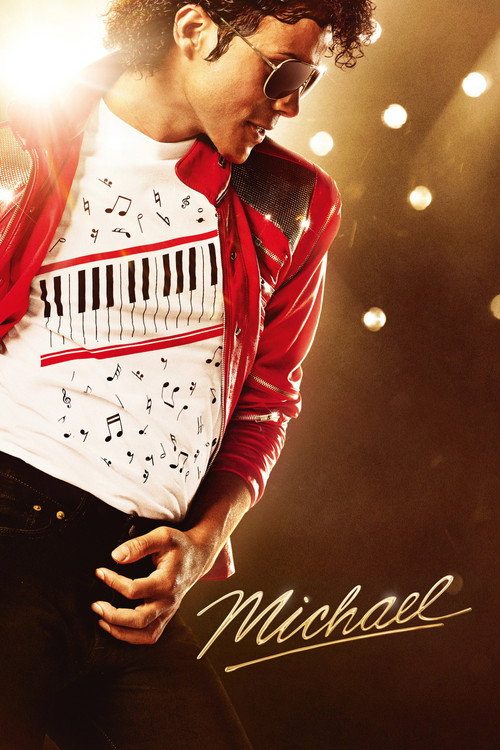
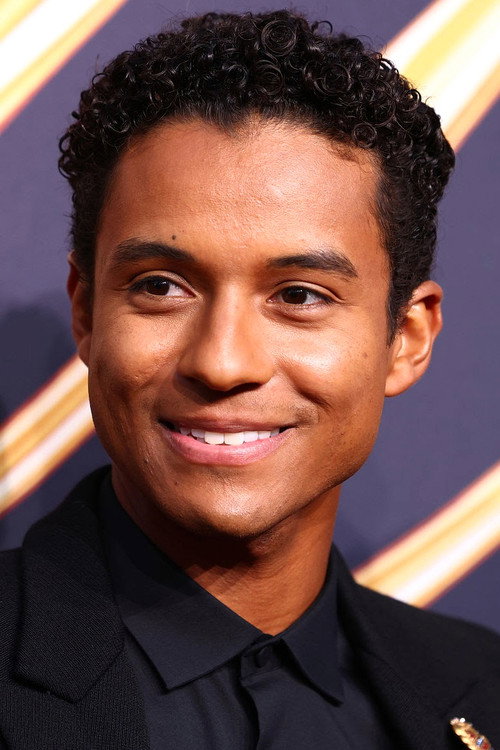
On the review aggregator website Rotten Tomatoes, 38% of 307 critics' reviews are positive, with an average rating of 4.9/10. The website's consensus reads: "While Jaafar Jackson's smooth moves bring the King of Pop to uncanny life, this musical biopic mostly plays like a 'greatest hits' album that could've benefitted from including liner notes to give actual insight into the icon." Metacritic, which uses a weighted average, assigned the film a score of 39 out of 100, based on 51 critics, indicating "generally unfavorable" reviews. Audiences polled by CinemaScore gave the film an average grade of "A−" on an A+ to F scale, while those surveyed by PostTrak gave it a 90% positive score, with 84% saying they would definitely recommend it.
Owen Gleiberman of Variety called Michael a "surprisingly effective middle-of-the-road biopic". He praised Jaafar's performance, writing that he "nails the look, the voice, the electrostatic moves — and the mix of delicacy and steel that made Michael who he was". Pete Hammond of Deadline Hollywood wrote: "You are bound to leave this one dancing. And what is wrong with that?" Abhimanyu Mathur of the Hindustan Times gave Michael four out of five, describing it as a "fun, soulful" film that "hits all the right notes" and praising Jaafar, but noted pacing and structural problems, including a lack of focus on Michael's brothers. Writing for Prothom Alo, the University of Chittagong professor Moshreka Aditi Haq praised Jaafar Jackson's performance, the depiction of Michael Jackson's childhood and artistic development, and its exploration of themes of freedom, rebellion, and creativity.
Nick Levine of NME gave Michael three out of five, calling it "a slick, accessible advert for Jackson's incredible imperial phase". He said the recreation of Jackson's Motown 25 performance was a highlight, but that the depiction of Jackson's songwriting process was "less forensic" and concluded that a sequel would be difficult. The Hollywood Reporter said fans would enjoy Michael, praising its performances, music, and "visual electricity", but wrote: "The film leaves itself open to accusations of making Michael a saint, which will not sit well with the cancel crowd. If you are unwilling to separate the art from the artist, this will not be a movie for you."
John Nugent of Empire gave Michael two out of five, calling it "deeply generic". Peter Bradshaw gave it two out of five in The Guardian, writing: "Jaafar fabricates Michael's onstage dancing and singing style with terrific, intuitive flair and the film naturally zaps you with the superb tracks themselves... But this is a frustratingly shallow, inert picture, a kind of cruise-ship entertainment, which can't quite bring itself to show that Michael was an abuse victim, brutalised by his father and robbed of his childhood." Writing for the BBC, Nicholas Barber gave Michael one out of five, calling it "a bland and barely competent daytime TV movie". Robert Daniels of RogerEbert.com gave it one out of four, saying it was "a filmed playlist in search of a story". Clarisse Loughrey of The Independent gave it one out of five, calling it "a ghoulish, soulless cash grab ... All Michael does is recreate, in mechanical style, the most famous visuals of Jackson's career ... Why bother to depict a human being when you can simply turn them into a product?"
Some criticized the lack of mention of the abuse allegations against Jackson. The Daily Telegraph critic Robbie Collin said Michael "refused to address the elephant in the room" and that it was not credible for a Michael Jackson biography to avoid addressing "the accusations, controversies and sadness that dogged his later life". The IndieWire critic Kate Erbland wrote that by omitting the allegations "the final film has been mostly stripped of any humanity, good and bad", calling it "glossy, sanitised, and surprisingly dull". The WBUR-FM critic Sean Burns likened the film ending with Jackson's Bad World Tour to "an O. J. Simpson biopic [ending] with him winning the Heisman Trophy". The Guardian writer Simran Hans characterized Michael as one of several recent films that presented "sanitized" biographies of beloved musicians, such as Bohemian Rhapsody (2018), Elvis (2022) and Back to Black (2024), writing that "when it comes to objectivity, integrity and veracity, audiences will always prioritise the chance to have a singsong".
In Pitchfork, Paul A. Thompson wrote that Michael was "a string of biopic clichés and blips of unsubtle brand management" that could not be separated from "the role it presumably plays for the Jackson estate and everyone with a financial stake in Michael's catalog". He said Fuqua's implication that Jackson's accusers are dishonest was "merely the clearest articulation of an ever-present subtext: that Michael ... is a victim of a vengeful 'media'". In The Root, Lawrence Ware argued that it was unfair to expect a film that covers Jackson's early life to address the allegations; that critics did not make similar complaints about biopics of white musicians with "complicated histories" such as Elvis Presley and Elton John; and that critics did not recognize the craft in the film. He concluded: "This film does exactly what it should: celebrate the genius of a man who gave us countless hits. What's wrong with giving fans what they want?"