Film and television career
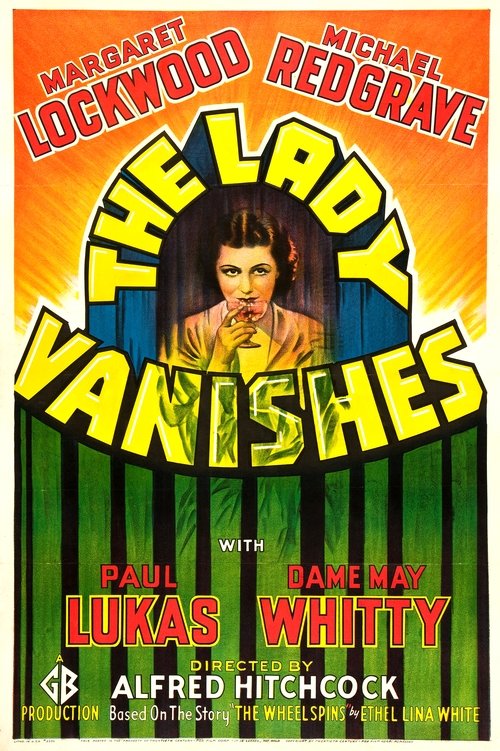
Redgrave first appeared on BBC television at the Alexandra Palace in 1937, in scenes from Romeo and Juliet. His first major film role was in Alfred Hitchcock's The Lady Vanishes (1938), which included a scene where he hummed the "Colonel Bogey March" in what was the first appearance of the tune in film. Ted Black put him under contract at Gainsborough.
Redgrave also starred in The Stars Look Down (1940), with James Mason in the film of Robert Ardrey's play Thunder Rock (1942), and in the ventriloquist's dummy episode of the Ealing compendium film Dead of Night (1945).
In 1946, the Motion Picture Herald annual poll of British film exhibitors showed that Redgrave was ranked in fourth place on a list of the most popular British stars at the box office.
His first American film role was opposite Rosalind Russell in Mourning Becomes Electra (1947), for which he was nominated for an Academy Award for Best Actor. In 1951 he starred in The Browning Version, from Terence Rattigan's play of the same name. The Daily Mirror described Redgrave's performance as Crocker-Harris as "one of the greatest performances ever seen in films".
In 1951, the Motion Picture Herald annual poll of British film exhibitors showed that Redgrave was ranked in ninth place on a list of the most popular British stars at the box office.
The 1950s also saw Redgrave in The Importance of Being Earnest (1952), The Dambusters (1954) with his portrayal of the inventor Barnes Wallis, 1984 (1956), Time Without Pity (1957), for which he was nominated for a BAFTA Award, and The Quiet American (1958). During the 1960s he was featured in The Loneliness of the Long Distance Runner, and in the 1970s he starred opposite Bette Davis in Connecting Rooms (1970) and played Sergey Sazonov in Nicholas and Alexandra (1971).
Notable television performances include narration for The Great War (1964), a history of World War I using stills and 'stretched' archive film, and the less successful Lost Peace series (BBC Television, 1964 and 1966). Of the latter, Philip Purser wrote: "The commentary, spoken by Sir Michael Redgrave, took on an unremittingly pessimistic tone from the outset." In 1970 he played Polonius in an ITV production of Hamlet that was broadcast in the United States as a Hallmark Hall of Fame special, and in 1973 he played a supporting role in David Winters' musical television film adaptation of Dr. Jekyll and Mr. Hyde, starring Kirk Douglas.
In 1975, Redgrave narrated the epic poem The Rime of the Ancient Mariner by Samuel Taylor Coleridge (a poem that Redgrave taught as a young schoolmaster). The film received six international film festival prizes, of which five were first place in category.