Plot
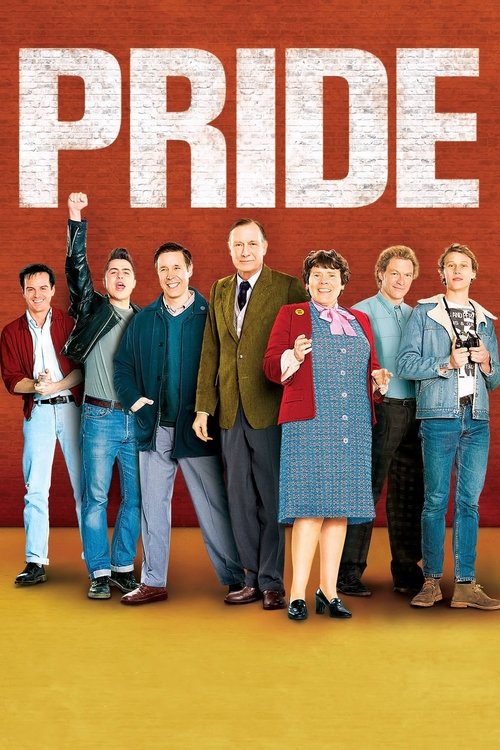
Upon watching the news about the Welsh miners' strike of 1984, gay activist Mark Ashton realises that the police have stopped harassing the gay community because they are harassing the miners instead. He spontaneously arranges a bucket collection for the miners during the Gay Pride Parade in London. Encouraged by the success, he founds "Lesbians and Gays Support the Miners" (LGSM). Among its first members are 20-year-old closeted student Joe Cooper and an older gay couple, Jonathan Blake and Gethin Roberts, whose bookshop, Gay's the Word, is used as the group's headquarters.
LGSM faces homophobia from the mining community and anger from gay people who have been mistreated by miners in the past. Frustrated by the lack of response, the activists instead decide to take their donations directly to the small mining village of Onllwyn in Wales. Dai Donovan, spokesperson for the miners in Onllwyn, comes to London to meet their new allies. Though he is startled to learn that "L" and "G" stand for "Lesbian and Gay", he expresses his gratitude in a short, eloquent speech at a gay bar, and the cause takes off.
In Onllwyn, the Women's Support group, led by Hefina Headon and Maureen Barry, debate whether to invite LGSM to the village as a thank you; Hefina, and her supporters, favour gratitude from all camps, whilst Maureen's supporters consider the gays abhorrent. First-time volunteer Siân James speaks up fiercely in favour of inviting LGSM and is asked to join the committee.
When LGSM arrives in Onllwyn, they are met with a frosty reception and Maureen leads a walkout after Mark's speech to the village. However, the next day, Jonathan shares with Siân his knowledge of harassment laws and abuse of police power; the fiery Siân marches down to the police station to demand the release of illegally detained miners.
Many grateful miners acknowledge LGSM's role in their release, relations begin to thaw and the two communities quickly become close. Finding herself on the outside, Maureen contacts a tabloid about the situation in Onllwyn. The resulting story humiliates the National Union of Mineworkers, who call a vote on whether to accept LGSM's support.
Back in London, Mark declares that they will embrace the labels in the tabloid and throws an enormous concert at the Electric Ballroom, headlined by Bronski Beat and attended by Dai, Hefina and a number of the women from the village. Mark is badly shaken when he encounters a former lover who implies that he, the lover, is dying of AIDS. The "Pits and Perverts" festival raises thousands of pounds for Onllwyn, but the Union vote moves forward three hours without notice, and without Dai or Hefina, Maureen's camp succeeds in voting to refuse further help from LGSM.
Disillusioned and haunted, Mark abandons LGSM. Gethin, who initially refused to participate due to his own experience coming out in a mining village, attempts to campaign alone and is violently assaulted and hospitalised. Meanwhile, Joe is outed when his parents find photos from Onllwyn and they keep him away from the group.
In March 1985, the miners' strike is over. The miners of Onllwyn gather to go back into the mines. Joe sees the news and sneaks off to Onllwyn to show solidarity, where he encounters Mark. Mark confronts Joe about hiding his activism and homosexuality from his parents. When Siân drives him to London in the LGSM-donated van, he learns of Gethin's condition. Joe decides it is time to leave home and has her drive him directly up to his home, embarrassing his conservative mother.
On the day of the 1985 Gay Pride Parade, Mark returns to the group and apologises for abandoning the cause. He leads LGSM to the Parade, where they are joined by hundreds of miners in a show of solidarity.
A textual epilogue reveals that consequently the Labour Party incorporated rights for gays and lesbians in their party programme due in part to a massive vote lodged by the National Union of Mineworkers, that Siân was elected to Parliament, that Jonathan still lived, despite being one of the first people in Britain to be diagnosed with HIV, and that Mark Ashton died of AIDS just two years later at the age of 26.





.jpg?width=400)